
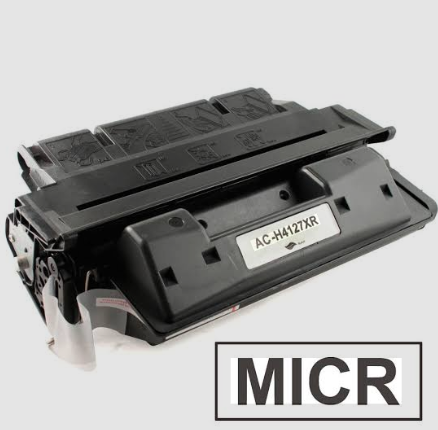
MICR:
In the banking world, speed and accuracy are very important. Every day, millions of checks are processed by banks. To make this process fast and secure, banks use a special technology called MICR.
MICR stands for Magnetic Ink Character Recognition. It may sound technical, but the idea is simple. This article explainsin easy English, including how it works, its benefits, and why it is still important today.
What Is MICR?
MICR (Magnetic Ink Character Recognition) is a technology used mainly by banks to print and read special numbers on checks. These numbers are printed at the bottom of a check using magnetic ink.
The magnetic ink allows machines to read the information quickly and correctly, even if the check has stamps or marks on it.
Where Is MICR Used?
MICR is mostly used in:
- Banks
- Financial institutions
- Government offices
- Large businesses that process checks
You can find numbers at the bottom of your check. These numbers include:
- Bank routing number
- Account number
- Check number
How Does MICR Work?
The process is simple but powerful.
- Special magnetic ink is used to print numbers on checks.
- When the check goes through a MICR reader, the machine magnetizes the ink.
- The reader detects magnetic signals from the characters.
- The system converts the signals into digital information.
This process allows banks to handle MICR thousands of checks every hour with high accuracy.
What Is the MICR Line?
The MICR line is the row of numbers printed at the bottom of a check. It uses a special font called E-13B (in the United States and some other countries) or CMC-7 (in Europe and parts of South America).
These fonts are designed so MICR machines can read them easily, and humans can also read them if needed.
Why Is MICR Important?
Even though online banking is popular today, paper checks are still used. MICR helps banks:
- Process checks faster
- Reduce errors
- Improve security
- Prevent fraud
- Handle large volumes of transactions
Without MICR, banks would need more manual work, which increases mistakes and slows down operations.
Benefits of MICR Technology
1. High Accuracy
MICR has a very low error rate compared to manual data entry.
2. Fast Processing
Machines can numbers quickly, saving time.
3. Strong Security
Magnetic ink is difficult to copy, which helps reduce fraud.
4. Easy to Read
Even if a check is stamped or slightly damaged, MICR readers can still detect the magnetic characters.
5. Cost-Effective
It reduces the need for manual work, saving money for banks and businesses.
MICR vs. OCR: What Is the Difference?
Some people confuse with OCR (optical character recognition). They are different technologies.
- uses magnetic ink and magnetic signals.
- OCR reads characters using light and visual scanning.
MICR is more secure for financial documents because it uses special magnetic ink that is harder to fake.
Is MICR still used today?
Yes, MICR is still widely used in banks around the world. Even with digital payments and mobile banking, many businesses and individuals still use checks.
MICR remains important because it offers the following:
- Reliable check processing
- Secure banking transactions
- Efficient financial operations
Banks trust this system because it has proven effective for many years.
Common MICR Applications
Besides checks, MICR can be used in the following:
- Deposit slips
- Official bank drafts
- Financial forms
- Payment vouchers
Any document that requires secure financial processing can benefit from MICR printing.
What Is MICR Printing?
MICR printing requires:
- Special magnetic toner or ink
- A compatible printer
- Correct fonts
Businesses that print their own checks must follow bank guidelines to ensure proper formatting and readability.
ALSO READ;https://weblibrarys.com/adpworkforcenow-com/
Using regular ink instead of magnetic ink can cause processing errors.
Challenges of MICR
While MICR is useful, it also has some limitations:
- Requires special printers and ink
- Mainly used for paper-based systems
- Less relevant in fully digital payment systems
However, it remains a strong solution for traditional banking operations.
The Future of MICR
As digital payments grow, the use of paper checks may decrease. However, many businesses and government systems still depend on checks.
MICR continues to play an important role where paper transactions are required. It works alongside modern banking systems to ensure smooth financial operations.
Final Thoughts
MICR (Magnetic Ink Character Recognition) is a trusted technology used in banking to process checks quickly and securely. It uses magnetic ink and special fonts to allow machines to read important numbers accurately.
Even in a digital world remains important for financial institutions. It offers speed, security, and reliability in check processing.
Understanding MICR helps you see how banks manage transactions efficiently behind the scenes.
Frequently Asked Questions (FAQs)
- What does MICR stand for?
MICR stands for Magnetic Ink Character Recognition.
- Where can I find the MICR number?
You can find it at the bottom of your check.
- Why is magnetic ink used in MICR?
Magnetic ink allows machines to read numbers accurately and securely.
- Is MICR still used today?
Yes, many banks still use MICR to process paper checks.
- Can regular printers print MICR checks?
No, you need special magnetic ink or toner for proper MICR printing.
- What font is used in MICR?
Common MICR fonts include E-13B and CMC-7.