
Virtual Reality (VR):
Virtual Reality (VR) is one of the most exciting technological innovations of the modern era. It creates immersive digital environments that allow users to interact with computer-generated worlds as if they were physically present. From gaming and education to healthcare and business, virtual reality is changing the way people learn, work, and entertain themselves.
As virtual reality (VR) becomes more affordable and accessible, it is finding applications across numerous industries. With advanced headsets, motion controllers, and realistic graphics, users can explore virtual environments that closely resemble the real world or completely imaginary settings. This article explores what virtual reality (VR) is, how it works, its benefits, applications, challenges, and future potential.
What Is Virtual Reality (VR)?
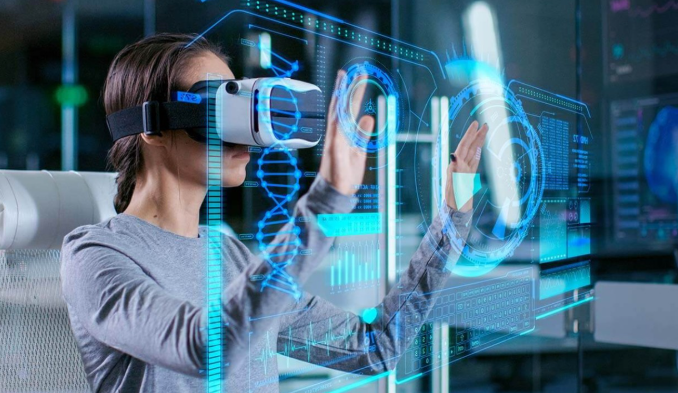
Virtual Reality (VR) is a technology that uses specialized hardware and software to create a simulated three-dimensional environment. Users wear a VR headset that displays digital images while tracking head and body movements. This creates the feeling of being inside a virtual world rather than simply viewing it on a screen.
Virtual Reality (VR) Many VR systems also include handheld controllers, sensors, and spatial audio, allowing users to interact naturally with virtual objects and environments.
How Virtual Reality Works
Virtual reality combines several technologies to deliver an immersive experience:
VR Headsets
The headset contains high-resolution displays positioned close to the eyes. These Virtual Reality (VR) screens present slightly different images to each eye, creating a realistic sense of depth.
Motion Tracking
Sensors monitor virtual reality (VR) and the movement of the user’s head and hands in real time. As the user moves, the virtual environment responds instantly, making the experience feel natural.
Controllers
Handheld controllers allow users to pick up objects, press buttons, draw in virtual reality (VR), throw items, or interact with virtual interfaces.
Spatial Audio
Three-dimensional Virtual Reality (VR) sound changes based on the user’s position, increasing realism and immersion.
ALSO READ;https://weblibrarys.com/green-technology/
Benefits of Virtual Reality (VR)
Immersive Entertainment
Gaming remains one of the most popular virtual reality (VR) players can step directly into game worlds, making gameplay more engaging than traditional consoles or PCs.
Better Learning Experiences
Educational institutions use virtual reality (VR) to create interactive lessons. Students can explore historical landmarks, scientific concepts, and virtual laboratories without leaving the classroom.
Improved Training
Companies use virtual reality (VR) to train employees in realistic but safe environments. Pilots, firefighters, surgeons, and military personnel all benefit from VR-based simulations.
Healthcare Advancements
Hospitals and medical schools use virtual reality (VR) for surgical training, rehabilitation, pain management, and mental health therapy. Patients can practice physical exercises or reduce anxiety through immersive experiences.
Remote Collaboration
Businesses are increasingly using virtual reality (VR) for virtual meetings, product demonstrations, and collaborative design sessions. Team members from different locations can meet in shared virtual spaces.
Applications of Virtual Reality
Gaming
Virtual Reality (VR) gaming delivers immersive adventures where players can move naturally and interact with realistic environments.
Education
Teachers use virtual reality (VR) to create engaging learning experiences that improve understanding and knowledge retention.
Healthcare
Doctors use virtual reality (VR) for surgical planning, patient rehabilitation, therapy, and medical education.
Real Estate
Property Virtual Reality (VR) buyers can take virtual home tours without traveling, saving both time and money.
Tourism
Travel companies provide virtual tours of destinations, hotels, museums, and historical virtual reality (VR) sites before customers book trips.
Manufacturing
Engineers use virtual reality (VR) to design products, test prototypes, and improve production processes before physical manufacturing begins.
Challenges of Virtual Reality
Although Virtual Reality (VR) offers numerous benefits, it also faces several challenges.
High Equipment Costs
Premium Virtual Reality (VR) headsets and accessories can still be expensive for some consumers.
Motion Sickness
Some users experience dizziness or discomfort during extended VR sessions due to differences between visual movement and physical movement.
Hardware Requirements
High-performance computers or gaming consoles may be required for virtual reality (VR) applications.
Limited Content
Although the Virtual Reality (VR) content library continues to grow, it remains smaller than traditional gaming and entertainment platforms.
Tips for Getting Started with Virtual Reality
If you are new to VR, consider the following recommendations:
Choose a headset that fits your budget and intended use.
Start with beginner-friendly applications.
Take regular breaks during long sessions.
Ensure you have enough virtual reality (VR) physical space to move safely.
Keep your headset clean and updated for the best performance.
The Future of Virtual Reality (VR)
The future of virtual reality (VR) is incredibly promising. Advances in artificial intelligence, cloud computing, and graphics technology are making VR experiences more realistic than ever before.
Future developments may include lighter headsets, improved eye tracking, full-body motion capture, realistic haptic feedback, and wireless connectivity. As internet Virtual Reality (VR) speeds continue to improve, cloud-based experiences will become more common, allowing users to access powerful virtual worlds without expensive hardware.
Virtual Reality (VR) is also expected to play an important role in education, healthcare, engineering, remote work, entertainment, and digital commerce. As technology evolves, virtual reality will become an increasingly important part of everyday life.
Conclusion
Virtual Reality (VR) is transforming how people interact with digital content by creating immersive, interactive experiences across many industries. From gaming and education to healthcare and business, VR offers innovative solutions that improve learning, productivity, and entertainment. While challenges such as cost and motion sickness still exist, ongoing technological advancements continue to make virtual reality (VR) more accessible and practical. As adoption grows, it is set to become a major force shaping the future of technology.
FAQs
- What is Virtual Reality (VR)?
Virtual Reality (VR) is a technology that creates immersive, computer-generated environments that users can explore using specialized headsets and controllers.
- What equipment is needed for VR?
Most VR systems require a VR headset, controllers, and in some cases a compatible PC, gaming console, or standalone device.
- Is virtual reality only used for gaming?
No. Virtual Reality (VR) is widely used in education, healthcare, business, engineering, tourism, real estate, and employee training.
- Can virtual reality help with education?
Yes. Virtual Reality (VR) provides interactive learning experiences that improve engagement and understanding through virtual simulations.
- Is virtual reality safe for children?
Many manufacturers recommend age limits for virtual reality (VR) headsets. Parents should follow the manufacturer’s guidelines and monitor usage time.
- Why do some people feel motion sickness in VR?
Motion sickness can occur in virtual reality (VR) when visual movement does not match the body’s physical movement. Taking breaks and adjusting settings can reduce discomfort.
- What is the difference between VR and augmented reality (AR)?
Virtual Reality (VR) creates a completely virtual environment, while AR overlays digital content onto the real world.
- What is the future of virtual reality?
Future Virtual Reality (VR) technologies are expected to feature better graphics, lighter headsets, improved tracking, advanced haptic feedback, AI integration, and broader applications across multiple industries.