
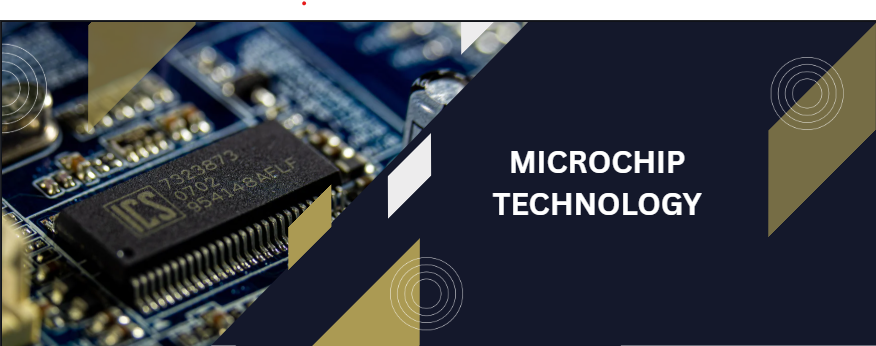
Microchip Technology is a major semiconductor company that develops products used in embedded systems, industrial equipment, automobiles, communication devices, and consumer electronics. Its technology helps electronic products sense information, process data, communicate with other devices, and control physical functions. From small household gadgets to sophisticated industrial machines, Microchip Technology plays an important role behind the scenes.
The company is particularly recognized for microcontrollers, analog components, connectivity solutions, memory products, and embedded-control technologies. As modern devices become smarter and more connected, semiconductor companies such as Microchip Technology have become increasingly important to the global technology ecosystem.
What Is Microchip Technology?
Microchip Technology refers to the semiconductor technology and products developed by Microchip Technology Incorporated. The company provides components that allow electronic systems to perform specific functions efficiently.
A microcontroller, for example, can act as the brain of an embedded product. It receives information from sensors, processes instructions, and controls outputs. These capabilities are useful in everything from appliances and vehicles to medical equipment and industrial machinery.
Microchip’s broad portfolio allows engineers to combine processing, communication, memory, timing, security, and control functions when designing electronic systems.
History of Microchip Technology
Microchip Technology was established in 1989 as an independent semiconductor company. One of its most influential product families has been the PIC microcontroller line, which became popular among engineers and electronics developers because of its flexibility and wide range of applications.
Over the years, Microchip expanded beyond microcontrollers through product development and acquisitions. Its portfolio grew to include analog semiconductors, memory, timing devices, networking technologies, security solutions, and other embedded products.
This long-term expansion has helped the company serve customers across many different technology markets.
Microcontrollers and Embedded Systems
Microcontrollers are one of Microchip Technology’s best-known areas. Unlike general-purpose computer processors, microcontrollers are designed to control specific functions within electronic systems.
A typical microcontroller can include a processor, memory, timers, communication interfaces, and input/output capabilities on a single chip. This makes it possible to build compact and efficient products.
Microcontrollers are widely used in:
- Automotive electronics
- Smart appliances
- Industrial equipment
- Consumer devices
- Security systems
- Energy-management products
- Internet-connected devices
Developers can program these chips to perform tasks according to the requirements of a particular product.
Automotive Technology
The automotive industry is undergoing major technological changes, with vehicles increasingly depending on electronics. Microchip Technology supplies semiconductor solutions that can support functions such as vehicle networking, body control, sensing, power management, and embedded control.
Modern vehicles contain numerous electronic systems that need to communicate reliably. Semiconductor technologies help these systems coordinate everything from basic controls to advanced vehicle functions.
As electric and connected vehicles become more common, the demand for sophisticated automotive electronics continues to grow.
Industrial Applications
Microchip Technology also has an important presence in industrial electronics. Factories increasingly use automation, sensors, controllers, robotics, and connected equipment to improve productivity and efficiency.
Microcontrollers and other semiconductor components can help industrial machines monitor conditions, process signals, communicate with control systems, and respond to changing environments.
These technologies are useful in manufacturing equipment, motor-control systems, power-management applications, industrial networking, and automation platforms.
Connectivity and Communication
Modern electronic devices rarely operate completely alone. They often need to communicate with other devices, computers, networks, or cloud-based systems.
Microchip provides technologies supporting different forms of wired and wireless connectivity. Such solutions can help designers create products capable of exchanging information efficiently.
Connectivity is especially important for the Internet of Things (IoT), where large numbers of sensors and electronic devices can collect and share data. Reliable communication technologies make it possible to build smarter homes, factories, vehicles, and infrastructure.
Security in Embedded Devices
Security has become a major consideration in electronic product development. Connected devices can potentially face unauthorized access, data manipulation, and other cybersecurity threats.
Microchip develops hardware and security technologies designed to help protect embedded systems. Security-focused components can assist with authentication, encryption-related operations, secure device identity, and protection of sensitive information.
As more everyday products become connected to networks, incorporating security into hardware design is becoming increasingly important.
Microchip Technology and the Internet of Things
The Internet of Things is another important application area for semiconductor technology. IoT devices can use sensors to collect information and then process or transmit that information.
Microchip’s microcontrollers, connectivity products, memory solutions, and security technologies can be combined to create IoT products for homes, agriculture, manufacturing, energy systems, and other environments.
For example, a smart monitoring device may use a microcontroller to process sensor data, a communication component to send information, and security technology to protect the connection.
Benefits for Engineers and Developers
Microchip Technology provides developers with a broad ecosystem of hardware, development tools, software, documentation, and technical resources. This can simplify the process of designing and programming embedded products.
Developers can select components based on processing requirements, power consumption, memory capacity, communication needs, and physical design limitations.
The availability of development platforms and software tools can also help engineers move from an early prototype toward a finished product more efficiently.
Challenges Facing the Semiconductor Industry
Although semiconductor technology offers enormous opportunities, the industry also faces significant challenges. Semiconductor manufacturing requires sophisticated facilities, specialized equipment, skilled workers, and complex global supply chains.
Companies must also respond to changing customer requirements, technological competition, component demand, and economic conditions. Maintaining reliable supply while continuing to develop innovative products is an ongoing challenge.
The Future of Microchip Technology
The future of Microchip Technology is closely connected to the broader growth of embedded computing. As vehicles, factories, appliances, energy systems, and consumer products become more intelligent, they require increasing numbers of semiconductor components.
Artificial intelligence at the edge, industrial automation, electric vehicles, connected devices, and energy-management systems could create new opportunities for embedded semiconductor technologies.
Future electronic products are likely to become more efficient, connected, secure, and capable. Microchip’s role in providing the underlying components for these systems makes it an important participant in the continuing evolution of electronics.
Conclusion
Microchip Technology is an important part of the modern semiconductor industry. Its microcontrollers, analog products, connectivity solutions, memory technologies, and security-related components support a wide variety of electronic applications.
From automobiles and industrial machines to IoT devices and consumer products, Microchip’s technologies help engineers build systems that can sense, process, communicate, and control information. As the world moves toward increasingly connected and intelligent electronics, semiconductor technologies will remain essential, and Microchip Technology is well positioned to contribute to that ongoing transformation.